

 Send Inquiry
 Call Us : 08045476569
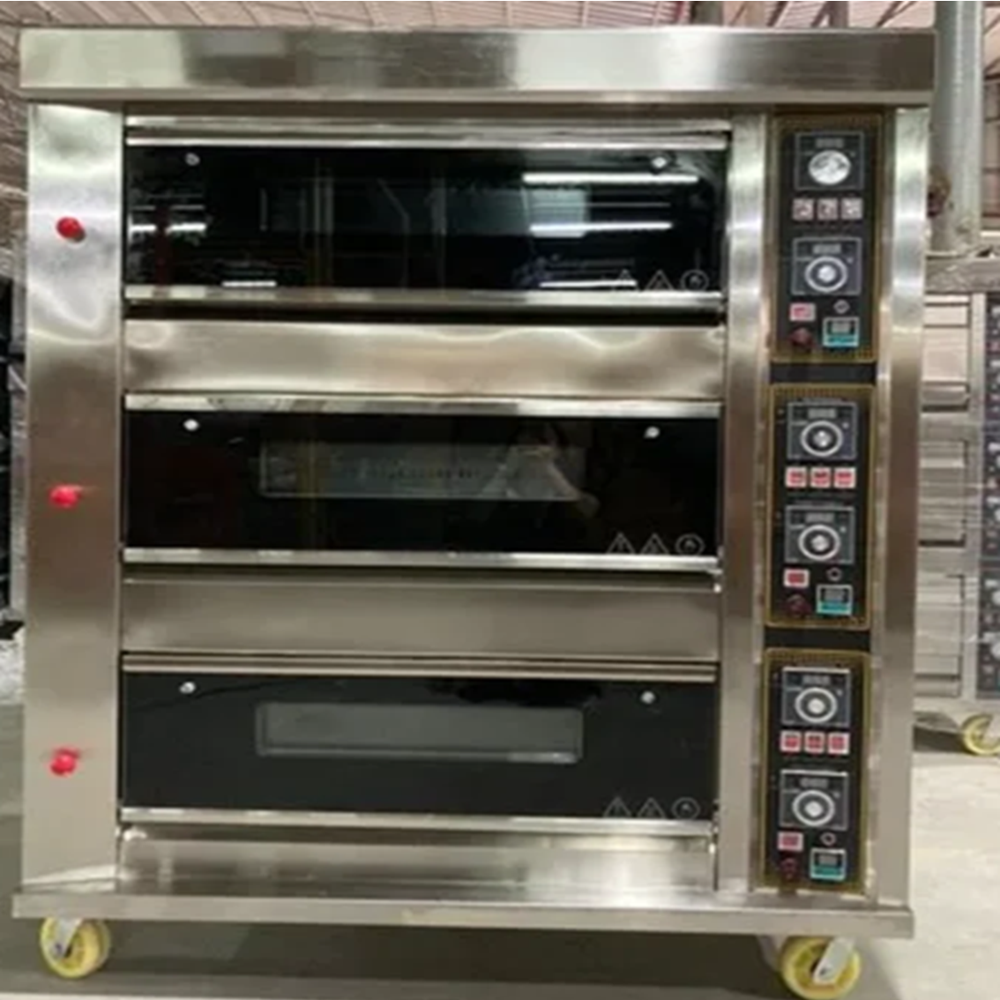
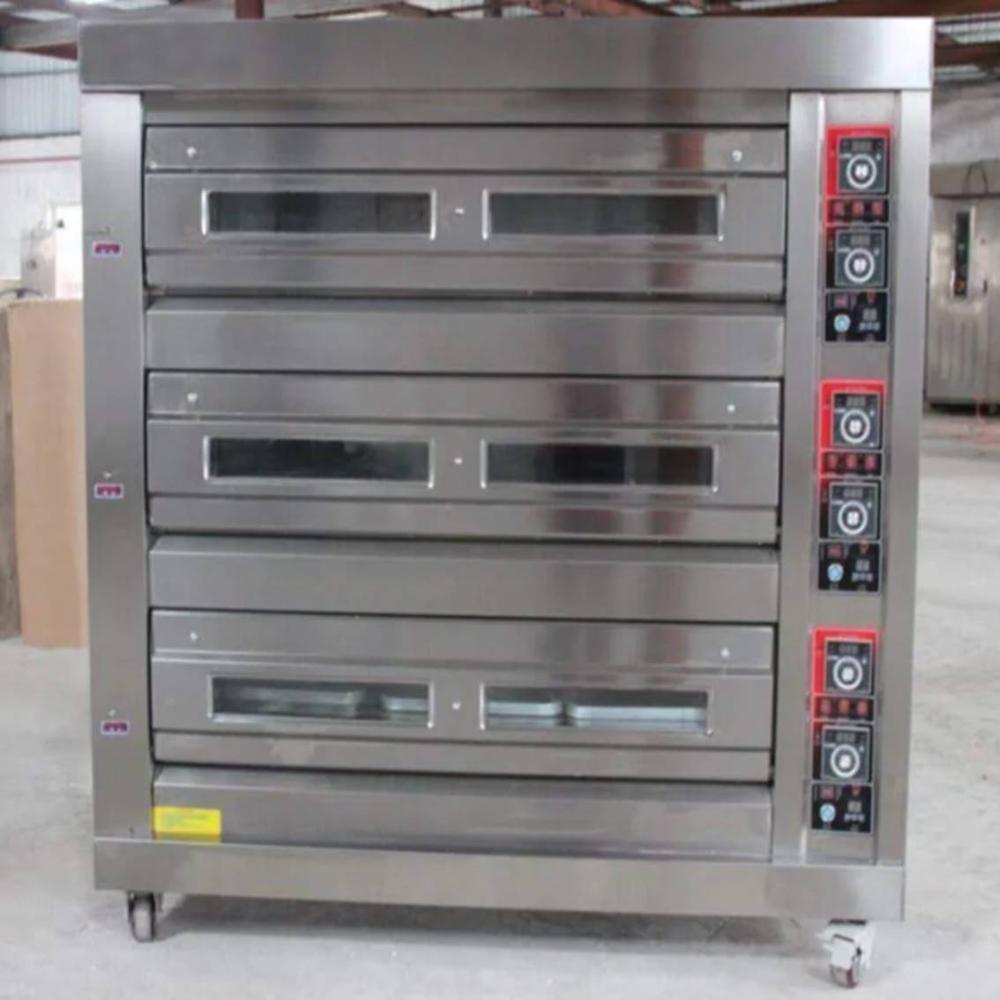
A 3 Deck 6 Tray Electric Operated Oven is a high-capacity, heavy-duty piece of commercial bakery equipment. It is designed for businesses that require consistent, high-volume baking, such as large bakeries, hotels, restaurants, and catering services.
Here is a detailed description of its features and operation:
Three Decks: The oven is composed of three separate, insulated baking chambers or "decks," stacked vertically. This tiered design allows for a large capacity within a relatively small footprint, making efficient use of kitchen space.
Six Trays: Each deck is designed to hold two standard commercial baking trays (typically 400x600 mm). This provides a total capacity of six trays, allowing for multiple batches of different items to be baked simultaneously.
Stainless Steel Construction: The exterior and interior are typically made of high-quality stainless steel (e.g., SS304). This material is chosen for its durability, resistance to corrosion, and ease of cleaning, ensuring a hygienic and long-lasting unit.
Insulated Doors with Viewing Windows: Each deck has its own door, often with heat-resistant tempered glass and internal lighting. This allows bakers to monitor the baking process without opening the door, which helps to maintain a consistent internal temperature and saves energy.
Electric Operation: The oven is powered by electricity, usually requiring a 3-phase connection for its high power rating (typically 18-22 kW). It uses heating elements, often infrared tubes, located on the top and bottom of each deck to heat the chamber.
Independent Deck Control: This is a key feature. Each of the three decks operates as a separate oven. It has its own control panel, thermostat, and timer. This allows you to bake different items at different temperatures and for different durations simultaneously. For example, you can bake bread at a high temperature in one deck, cakes at a lower temperature in another, and cookies in the third.
Top and Bottom Heat Control: Within each deck, the temperature of the top and bottom heating elements can be controlled independently. This gives the baker precise control over the baking process, allowing for perfect browning of crusts and even cooking.
Digital or Mechanical Controls: The oven is equipped with a control panel, which can be either a traditional mechanical interface or a more advanced digital touch panel. Digital controls often include pre-set memory functions for common recipes, timers with alarms, and precise temperature readouts.
Fast and Even Heating: The electric heating elements are designed for rapid and uniform heat distribution, ensuring that products are baked consistently with no hot spots. The heavy insulation helps to retain heat and reduce energy consumption.
High-Volume Production: Its large capacity and multi-deck design are ideal for businesses with high demand for baked goods.
Versatility: The independent deck controls allow for the simultaneous baking of a wide range of products, including breads, cakes, pastries, pizzas, and more.
Precision and Consistency: Separate temperature controls for each deck and for the top and bottom heating elements ensure precise baking results and a consistent final product.
Energy Efficiency: The well-insulated body and the ability to operate only the decks that are needed help to minimize energy consumption.
Safety Features: Many models include safety features such as automatic power cut-offs for over-temperature protection, leakage protection, and well-insulated handles

Price:
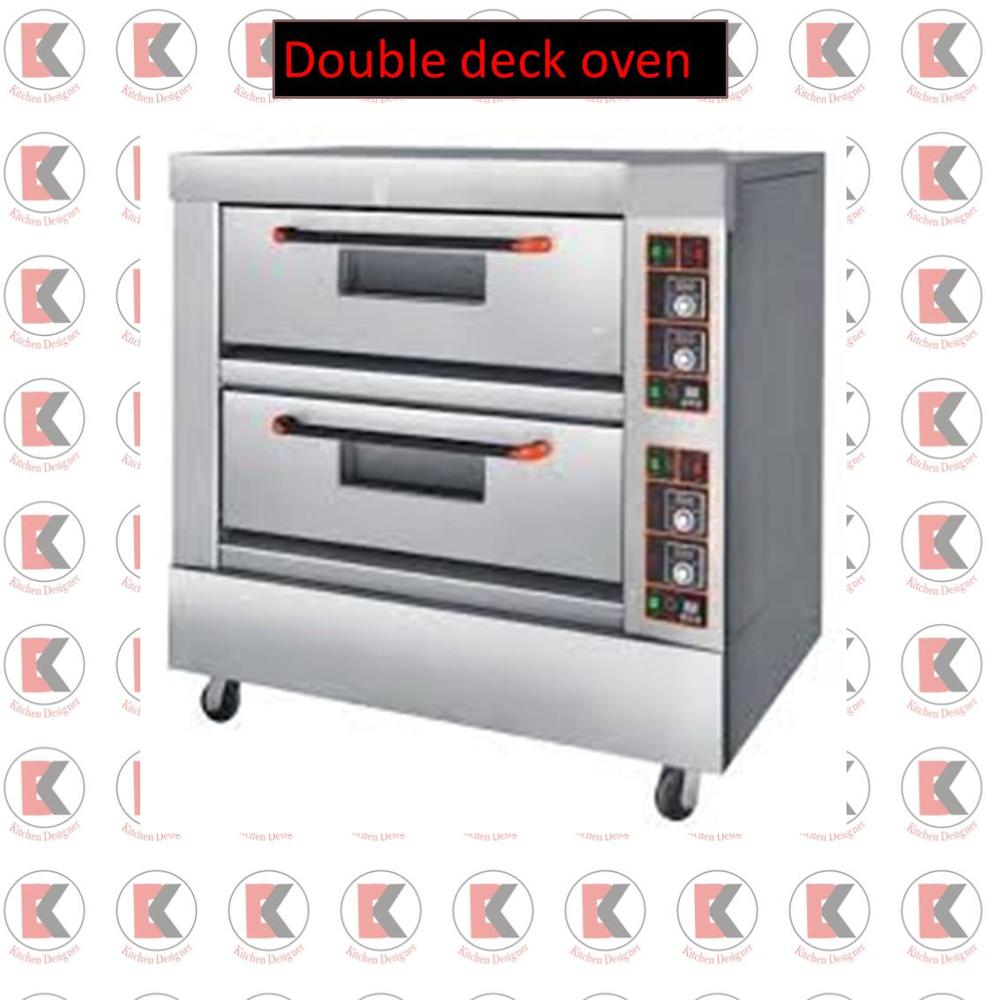
Price 42000.00 INR / Unit
Minimum Order Quantity : 1 Unit
Material : Stainless Steel
Power Source : Electric
Product Type : Deck Baking Oven
Color : Silver
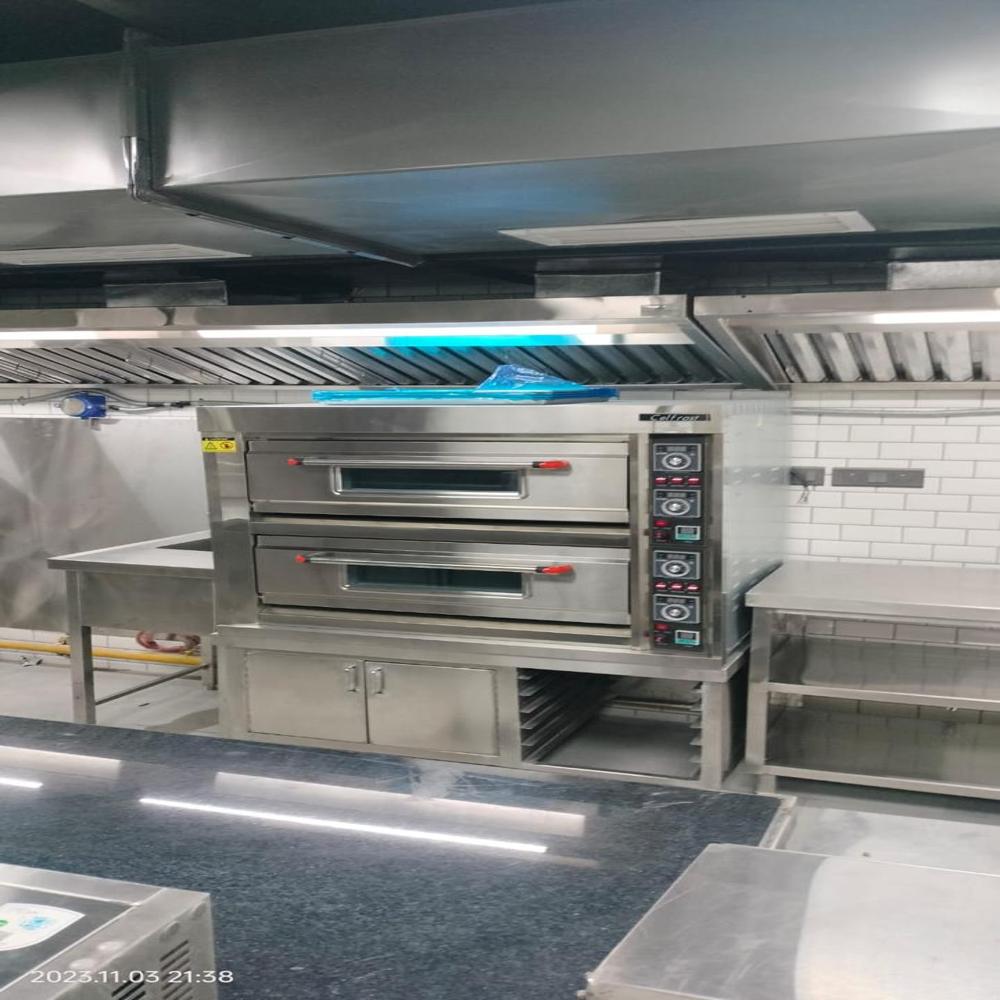
Price 65000.0 INR / Piece
Minimum Order Quantity : 1 Piece
Material : Stainless Steel
Power Source : Electric
Product Type : Other
Color : Silver
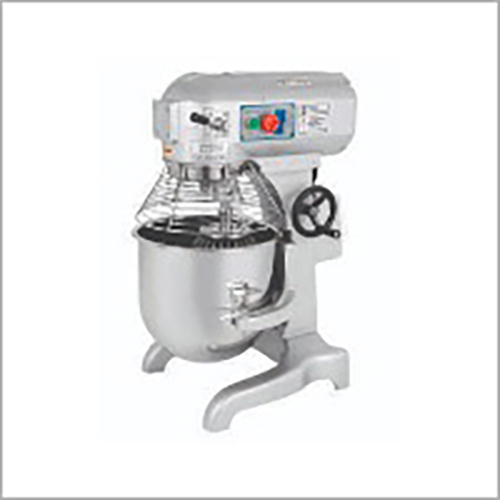
Price 45000 INR / Unit
Minimum Order Quantity : 1 Unit
Material : Stainless Steel
Power Source : Electric
Product Type : Other, Planetary Mixer
Color : Silver
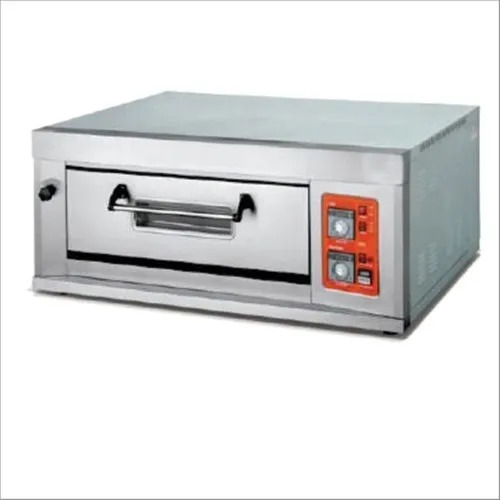
Price 18000.0 INR / Piece
Minimum Order Quantity : 1 Piece
Material : Stainless Steel
Power Source : Electric
Product Type : Baking Equipment
Color : Grey,Silver


 info@kitchenequipmentdelhi.com
|



 Send Inquiry

 Send Inquiry
 Send SMS


